
© 2026 by StratonomicsTM. This document is licensed to be used only by permission from Stratonomics-K12TM. All information shared is copyrighted, proprietary, and confidential. Do not copy, record, share, store, distribute, use in language or learning models, modify content, use for teaching purposes without full attribution, assign as reading, transmit, or otherwise use in any capacity (e.g., corporate presentations or strategy planning) without express written permission and full attribution. Contact info@stratonomics.inc for rights and permissions.

www.stratonomics-k12.com

Stratonomics-K12TM Strategy Science Study

industry insights assets k12-37

Stratonomics-K12TM Strategy Science Study

Background

Whether charter schools improve or undermine kindergarten through 12th grade (K-12) education remains one of the most contested questions among politicians, school districts, and community leaders. Proponents argue that competition from charters introduces innovation, accountability, and higher quality outcomes in underperforming public schools, particularly those serving historically underserved students. Critics counter that charters produce uneven results, divert resources from traditional public schools, and exacerbate public school underperformance by cherry picking high performing students.

A large-scale study from the Center for Research on Education Outcomes at Stanford found that charter schools, in general, deliver better outcomes for low-income and minority students, though the effects vary substantially across states, cities, operators, and regions. Another study showed charter schools tend to be more effective in urban areas than rural areas.

At the same time, studies by the Economic Policy Institute question the benefits of charter school expansions. One report documented how the charter schools’ expansion forces changes among traditional public school districts, while another concluded that charter school growth increases financial pressures on public schools as they lose students.

Given the divergent results, district leaders must further explore the views of the most critical stakeholder in schools: parents who entrust their children to the districts. How do parents perceive charter schools and their effect and effectiveness for the K-12 sector as a whole?

A customer-focused strategy based on parents’ needs enables educational institutions to identify the strategic areas providing the most value to them, align strategy execution to those needs, and ultimately improve customer loyalty and academic outcomes. Without a clear understanding of parents’ value drivers, school district strategies miss the mark, leading to declining enrollment and academic achievement.

www.stratonomics-k12.com

1

Stratonomics-K12TM Strategy Science Study

Research Methodology

Since 2022, the Stratonomics-K12™ Strategy Science Study has measured parents’ beliefs and attitudes about, as well as satisfaction with, their child’s education. The ongoing study measures parent satisfaction on different dimensions of K-12 education, along with their agreement with various statements about the school experience.

The study, based on survey responses from 17,700 parents of K-12 children, focuses on parents’ preference among public, private, charter, and other forms of schooling for their children.

Stratonomics-K12 measures parents’ beliefs and attitudes about their child’s education.

www.stratonomics-k12.com

2

Stratonomics-K12TM Strategy Science Study

industry insights assets k12-39

www.stratonomics-k12.com

3

Stratonomics-K12TM Strategy Science Study

industry insights assets k12-40

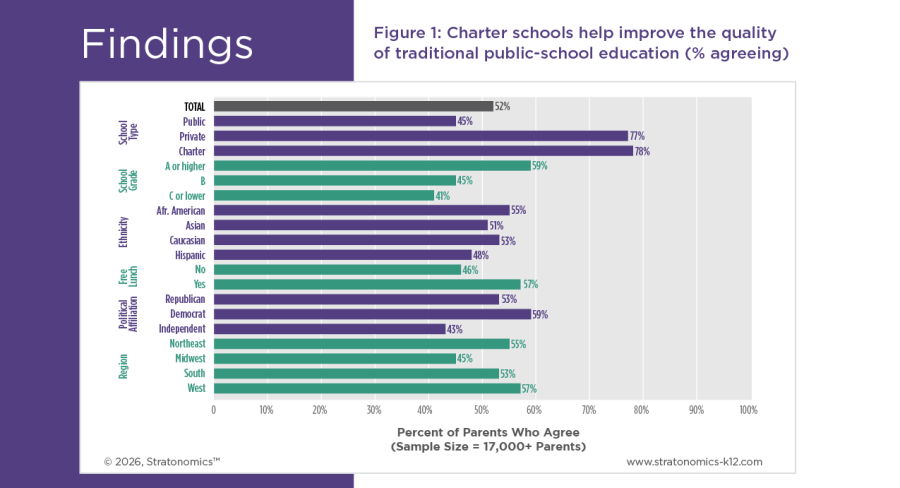
Figures 1, 2, 3, 4, and 5 show parents’ agreement with various statements about charter schools and their impact on traditional public schools.

As shown in Figure 1, about half of parents (52%) agree that charter schools help improve the quality of traditional public school education. Furthermore:
  • Agreement is stronger among parents of students in charter schools and private schools than among public school parents.
  • Those grading their school A or higher most strongly agree that charter schools help improve the quality of public-school education.
  • Ethnicity does not impact agreement a great deal.
  • Parents of students with access to free/reduced lunch agree more strongly than those without access.
  • Democrats are more likely than Republicans or Independents to agree.
  • Parents in the Midwest are least likely to agree that charter schools help improve the quality of traditional public-school education.

www.stratonomics-k12.com

4

Stratonomics-K12TM Strategy Science Study

industry insights assets k12-41

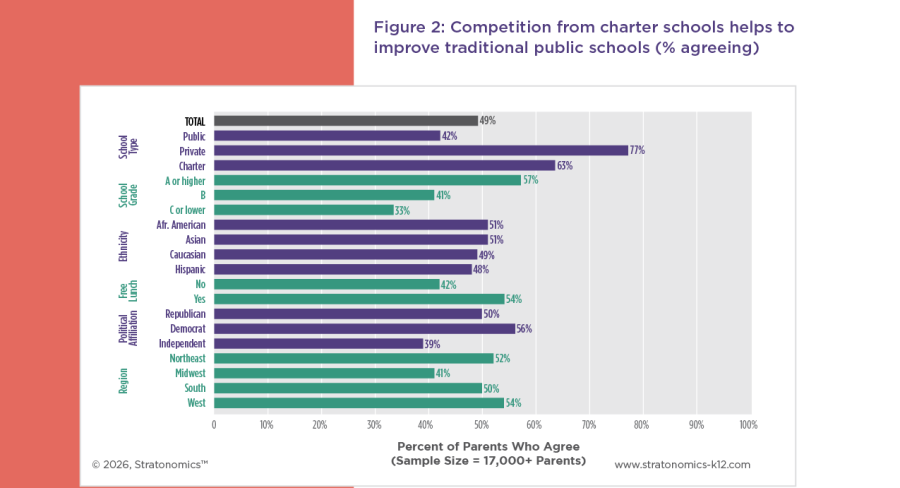
As shown in Figure 2, about half of parents (49%) agree
that competition from charter schools helps to improve
traditional public schools. Furthermore:
  • Agreement is stronger among parents of students in private schools and charter schools than among public school parents.
  • Parents who grade their school A or higher strongly agree that competition from charter schools helps improve public schools.
  • Ethnicity has little impact on agreement.
  • Parents of children with access to free/reduced lunch agree more than those without access.
  • Democrats are more likely than Republicans or Independents to agree.
  • Parents in the Midwest are less likely to agree than parents in other regions.

www.stratonomics-k12.com

5

Stratonomics-K12TM Strategy Science Study

industry insights assets k12-42

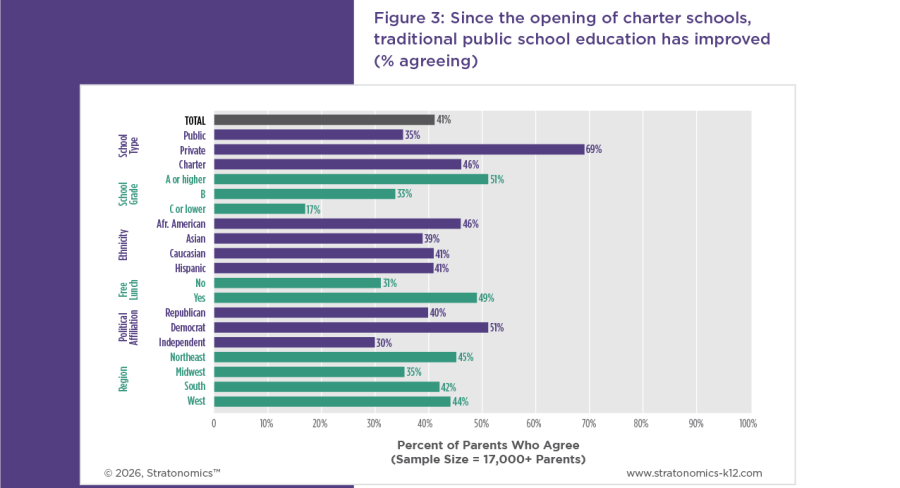
As shown in Figure 3, just 41% of parents agree that since the opening of charter schools, traditional public-school education has improved. Furthermore:
  • Agreement is strongest among parents of private school parents and those grading their school A or higher.
  • African Americans are somewhat more likely to agree than other ethnicities.
  • Access to free/reduced lunch results in strong agreement.
  • Democrats are more likely than Republicans and Independents to agree.
  • Parents in the Midwest are least likely to agree.

www.stratonomics-k12.com

6

Stratonomics-K12TM Strategy Science Study

industry insights assets k12-43

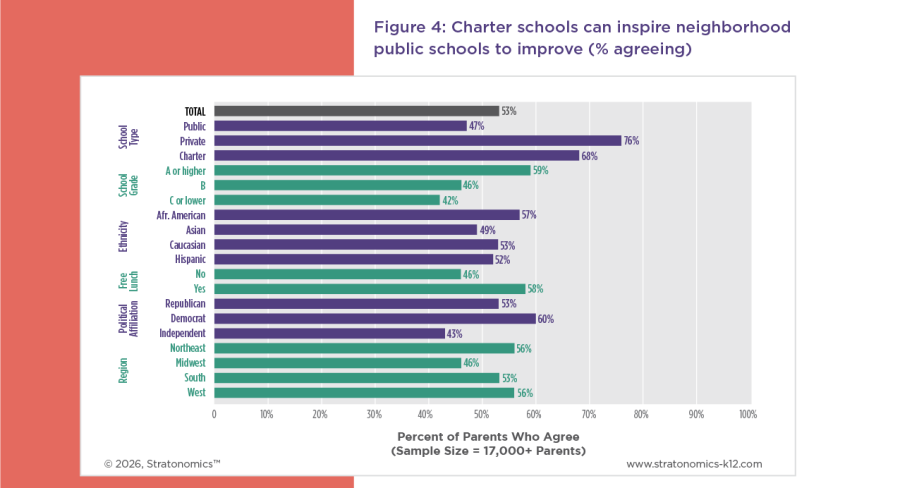
Figure 4 shows that more than half of parents (52%) agree that charter schools can inspire neighborhood public schools to improve. Furthermore:
  • Agreement is stronger among parents of students in private and charter schools than among public-school parents.
  • Parents grading their school A or higher most strongly agree that charter schools can inspire neighborhood public schools to improve.
  • Ethnicity does not impact agreement, although agreement is slightly stronger among African Americans than among other groups.
  • Parents of students with access to free/reduced lunch agree more than those without access.
  • Democrats are more likely than Republicans or Independents to agree.
  • Parents in the Midwest are least likely to agree.

www.stratonomics-k12.com

7

Stratonomics-K12TM Strategy Science Study

industry insights assets k12-44

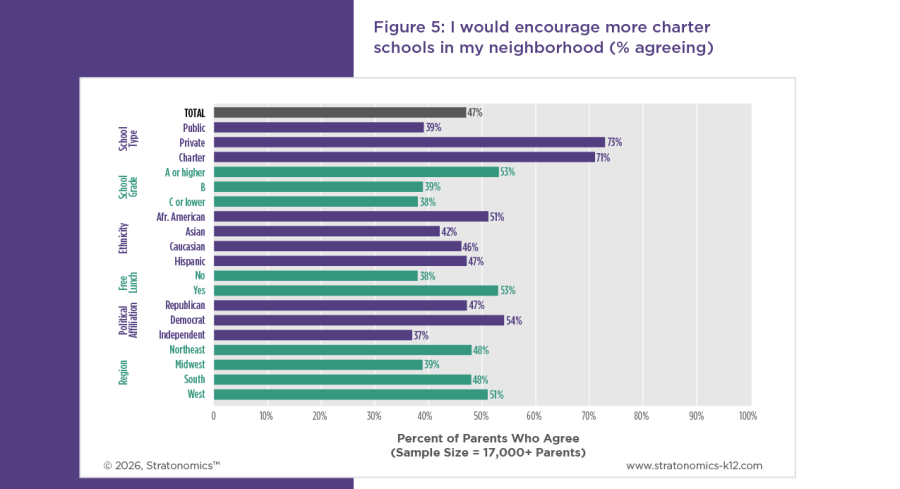
As shown in Figure 5, just under half of parents (47%) agree they would encourage more charter schools in [their] neighborhood. Furthermore:
  • Agreement is stronger among parents of private and charter school students than among public school parents.
  • Parents who grade their schools A or higher are most likely to agree they would encourage more charter schools in their neighborhood, than parents grading their school B or lower.
  • Ethnicity does not impact agreement significantly, though African Americans are slightly more likely to agree than other groups.
  • Parents of children with access to free/reduced lunch are more likely to agree than those without access.
  • Democrats are more likely than Republicans or Independents to agree.
  • Midwest parents are least likely to agree.

www.stratonomics-k12.com

8

Stratonomics-K12TM Strategy Science Study

industry insights assets k12-46

As shown in Figure 6, parents are quite satisfied (84%) with the way their schools are using digital technology to increase learning opportunities. Furthermore:
  • Parents of private school students and those grading their schools A or higher are most satisfied.
  • Few differences emerge based on access to free/reduced lunch.
  • Democrats are most satisfied with schools’ way of using digital technology to increase learning opportunities.
  • Caucasians are more satisfied than other ethnicities with schools’ use of digital technology to increase learning opportunities.
  • Region has little impact on satisfaction.

www.stratonomics-k12.com

9

Stratonomics-K12TM Strategy Science Study

industry insights assets k12-47

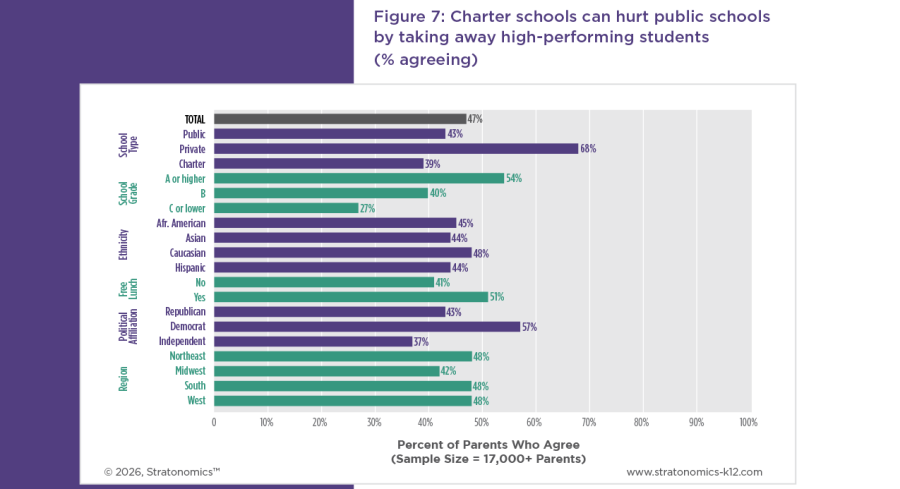
As shown in Figure 7, under half of parents (47%) agree that charter schools can hurt public schools by taking away high-performing students. Furthermore:
  • Parents of students in private schools and schools they grade A or higher are most likely to agree.
  • Agreement does not vary significantly based on ethnicity.
  • Agreement that charter schools can hurt public schools by taking away high-performing students, is higher among parents whose children have access to free/reduced lunch than those without access.
  • Democrats agree more strongly than Republicans or Independents.
  • Region is not a major factor affecting agreement, but parents in the Midwest agree somewhat less than those in other regions.
  • Midwest parents are least likely to agree.

www.stratonomics-k12.com

10

Stratonomics-K12TM Strategy Science Study

industry insights assets k12-48

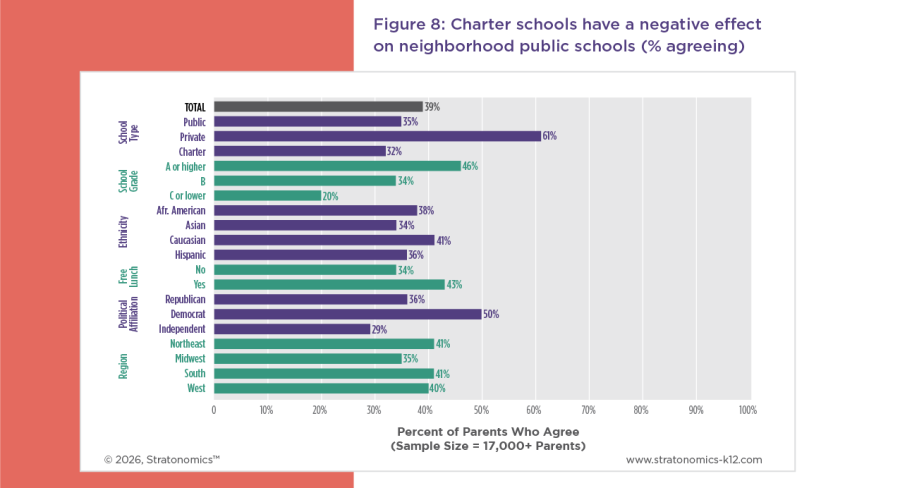
As shown in Figure 8, just 39% of parents agree that charter schools have a negative effect on neighborhood public schools. Furthermore:

  • Parents of private school students are more likely to agree than parents of public or charter school students.
  • Agreement is strong among parents who grade their child’s school A or higher.
  • Ethnicity has minimal impact on agreement.
  • Agreement is highest among parents whose children have access to free/reduced lunch.
  • Democrats are more likely than Republicans and Independents to agree that charter schools have a negative effect on public schools.
  • Region has little impact on agreement, but parents in the Midwest are slightly less likely to agree than parents in other regions.

www.stratonomics-k12.com

11

Stratonomics-K12TM Strategy Science Study

Key Takeaways

Beliefs about charter schools’ impact on traditional public-school education are nuanced. Most parents agree that charter schools are beneficial to public school education, but they would also encourage increased funding for neighborhood public schools.

  • Regarding the benefits of charter schools for public school education:
    • About half agree that charter schools help improve the quality of traditional public school education and competition from charter schools helps to improve traditional public schools and [they] would encourage more charter schools in [their] neighborhood.
    • About half agree that charter schools can inspire neighborhood public schools to improve, but fewer agree that since the opening of charter schools, traditional public-school education has improved.
    • Perceptions that charter schools positively impact public education are more prevalent among parents of students in private and charter schools, those who grade their school A or higher, Democrats, and parents whose children have access to free/reduced lunch.
      These perceptions are also slightly more common among African Americans. Parents in the Midwest are least likely to acknowledge the benefits of charter schools for public school education.
  • Though parents recognize that public education can be positively impacted by charter schools, some see negative impacts:
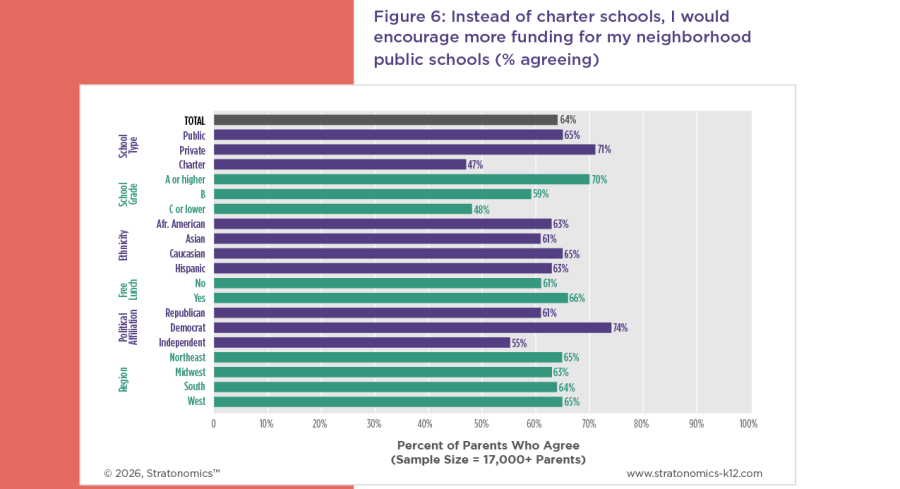
    • A majority of parents agree that instead of charter schools, [they] would encourage more funding for [their] neighborhood public schools.
    • In addition, just under half indicate
      charter schools can hurt public schools by taking away high performing students and fewer agree that charter schools have a negative effect on neighborhood public schools.
    • These perceptions are strongest among parents of private school students, those grading their school A or higher, Democrats, and parents of students with access to free/reduced lunch.

Insights from this report can enable school districts’ strategic plan by informing them of parents’ feelings regarding the impact of charter schools on public school education.

www.stratonomics-k12.com

12

Citation

Mittal, Vikas (2026), “Do Charter Schools Improve or Undermine Traditional Public Schools? A Parent Perspective,” Stratonomics-K12™ Strategy Science Study, 1-13.